Krogløftespande er væsentlige komponenter i affaldshåndtering og materialehåndtering, designet til at lette effektiv og sikker transport af forskellige typer affald og materialer. Forebyggelse af affaldslækage er dog et kritisk aspekt af deres funktionalitet, da det sikrer miljøbeskyttelse, opretholder renlighed og overholder lovmæssige standarder. I denne omfattende artikel vil vi udforske de forskellige mekanismer og funktioner, som Krogløftespande anvender for at forhindre affaldslækage, hvilket sikrer, at de fungerer effektivt og ansvarligt.
Forstå vigtigheden af lækageforebyggelse
Affaldslækage fra krogløftespande kan have alvorlige konsekvenser, herunder miljøforurening, sundhedsfarer og juridiske konsekvenser. Lækket affald kan forurene jord, vandområder og atmosfæren, hvilket udgør en risiko for økosystemer og menneskers sundhed. Desuden pålægger de regulerende myndigheder strenge retningslinjer for affaldshåndteringspraksis, og manglende forebyggelse af lækage kan resultere i bøder og sanktioner. Derfor er det bydende nødvendigt for krogløftespande at inkorporere effektive foranstaltninger for at forhindre affaldslækage på alle stadier af driften.
Designfunktioner til lækageforebyggelse
1. Robuste byggematerialer
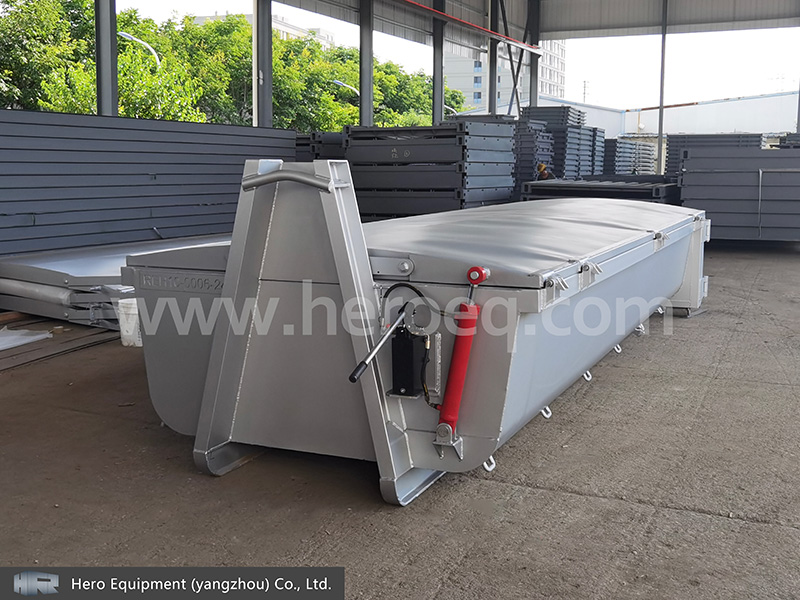
Valget af materialer, der bruges til at konstruere krogløftespande, spiller en afgørende rolle for at forhindre affaldslækage. Beholdere er typisk lavet af højstyrke, holdbare materialer såsom stål eller aluminium, som er modstandsdygtige over for punkteringer, rifter og korrosion. Disse materialer giver en solid og uigennemtrængelig barriere, der kan modstå belastningen af affaldsindsamling, transport og bortskaffelse. Derudover er skraldespandens vægge, gulv og låg designet til at være sømløse og fri for revner eller huller, hvilket eliminerer potentielle indgangspunkter, hvor affald kan undslippe.
2. Forseglede døre og låg
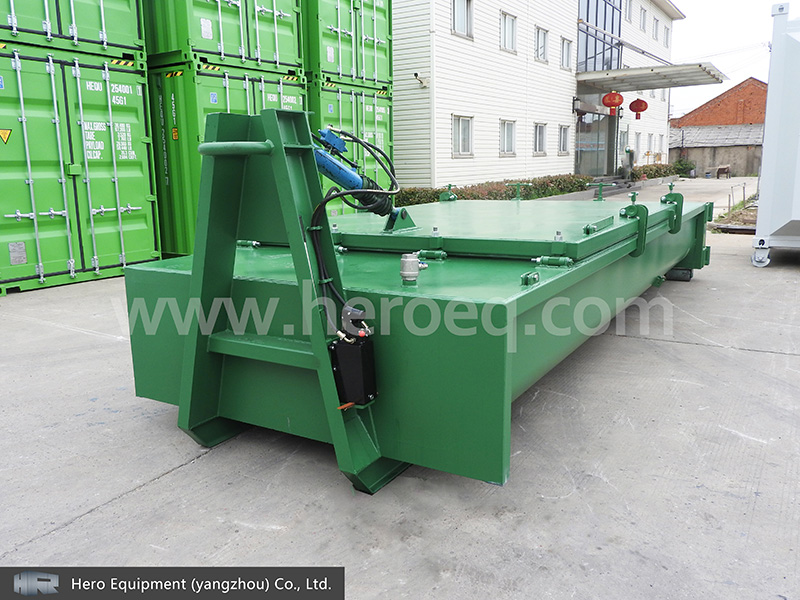
En af de primære mekanismer til at forhindre affaldslækage er brugen af lukkede døre og låg. Krogløftespande er udstyret med tætsluttende låger og låg, der skaber en sikker lukning, når spanden ikke er i brug. Disse lukninger er designet til at passe tæt mod spandens ramme, hvilket forhindrer huller, hvorigennem affald kan lække. For at forstærke tætningseffekten er der ofte monteret pakninger eller tætninger rundt om kanterne af dørene og lågene. Disse tætninger er typisk lavet af gummi- eller silikonematerialer, som giver en fleksibel og holdbar barriere mod lækager, selv under varierende trykforhold.
3. Forstærkede hjørner og kanter
Hjørnerne og kanterne på krogløftespandene er områder, hvor stresskoncentrationer kan forekomme, hvilket gør dem modtagelige for skader og potentielle lækagepunkter. For at imødegå dette er skraldespandene designet med forstærkede hjørner og kanter, der er tykkere og stærkere end resten af beholderens struktur. Denne forstærkning hjælper med at fordele belastningen jævnt og reducerer sandsynligheden for revner eller brud, der kan føre til affaldslækage. Derudover foretrækkes afrundede hjørner ofte frem for skarpe hjørner, da de er mindre tilbøjelige til at flise og giver en glattere overflade, som affald kan flyde over.
4. Glatte indvendige overflader
De indvendige overflader af krogløftespande er designet til at være glatte og fri for fremspring eller uregelmæssigheder. Denne glathed letter den lette flytning af affald i skraldespanden, hvilket reducerer risikoen for, at affald bliver fanget eller fanget og efterfølgende lækker ud. Derudover er glatte overflader nemmere at rengøre og vedligeholde, hvilket minimerer ophobningen af rester eller snavs, der kan kompromittere beholderens integritet og føre til lækage.
Operationelle foranstaltninger til lækageforebyggelse
1. Korrekte læsseteknikker
Den måde, hvorpå affald læsses i krogløftespande, kan have stor indflydelse på risikoen for lækage. For at forhindre affald i at spilde eller flytte sig under transport, er det vigtigt at følge korrekte pålæsningsteknikker. Dette omfatter jævn fordeling af affaldet i skraldespanden, undgåelse af overfyldning og komprimering af affaldet for at minimere tomme rum. Ved at sikre, at affaldet læsses på en kontrolleret og organiseret måde, reduceres sandsynligheden for lækage kraftigt.
2. Sikker fastgørelse
Når beholderen er læsset, er det afgørende at sikre den ordentligt for at forhindre bevægelse eller forskydning under transport. Dette opnås typisk ved at bruge fastspændingsstropper, kæder eller andre fastgørelsesanordninger til at fastgøre beholderen til krogløftevognen eller traileren. Korrekt fastgørelse forhindrer ikke kun beholderen i at vælte eller løsne sig, men minimerer også risikoen for, at affald spilder ud på grund af vibrationer eller stød under transport.
3. Regelmæssig inspektion og vedligeholdelse
Rutinemæssig inspektion og vedligeholdelse er afgørende for at identificere og løse eventuelle problemer, der kan føre til affaldslækage. Inspektioner bør udføres regelmæssigt for at kontrollere for tegn på slid, beskadigelse eller korrosion på beholderens struktur, døre, låg og tætninger. Eventuelle identificerede problemer skal omgående repareres eller udskiftes for at sikre, at beholderen forbliver lækagetæt. Derudover er regelmæssig rengøring af beholderens indre nødvendig for at fjerne ophobet affald eller snavs, der kan kompromittere tætningernes integritet eller forårsage blokeringer.
Teknologiske innovationer til lækageforebyggelse
1. Lækagedetektionssystemer
Fremskridt inden for teknologi har ført til udviklingen af lækagedetektionssystemer, der kan overvåge krogløftespande for tegn på lækage i realtid. Disse systemer bruger typisk sensorer eller kameraer til at detektere tilstedeværelsen af affald uden for skraldespanden eller ændringer i tryk eller fugtighedsniveauer, der kan indikere en lækage. Når der opdages en lækage, sendes en advarsel til operatøren eller affaldshåndteringsfaciliteten, hvilket giver mulighed for øjeblikkelig handling for at inddæmme og rense spildet.
2. Smart Bin-teknologi
Smart bin-teknologi inkorporerer sensorer og tilslutningsfunktioner, der muliggør fjernovervågning og kontrol af krogløftespande. Disse skraldespande kan levere realtidsdata om fyldningsniveauer, temperatur og andre parametre, hvilket giver affaldshåndteringsvirksomheder mulighed for at optimere deres drift og forhindre overfyldning eller andre problemer, der kan føre til lækage. Derudover kan smarte skraldespande udstyres med automatiske alarmer og meddelelser for at informere operatører om eventuelle problemer, hvilket sikrer hurtig respons og minimerer risikoen for affaldslækage.
Konklusion
Forebyggelse af affaldslækage fra krogløftespande er en mangefacetteret bestræbelse, der kræver omhyggelig overvejelse af designegenskaber, driftspraksis og teknologiske innovationer. Ved at inkorporere robuste byggematerialer, forseglede døre og låg, forstærkede hjørner og kanter og glatte indvendige overflader, er krogløftespande i sagens natur designet til at minimere risikoen for lækage. Derudover forbedrer korrekte læsseteknikker, sikker fastgørelse og regelmæssig inspektion og vedligeholdelse deres lækageforebyggende evner yderligere. Teknologiske fremskridt såsom lækagedetektionssystemer og smart bin-teknologi tilbyder yderligere beskyttelseslag, hvilket muliggør proaktiv overvågning og respons på potentielle lækagehændelser. I sidste ende kan affaldshåndteringsvirksomheder ved at prioritere lækageforebyggelse sikre sikker og ansvarlig håndtering af affald, beskytte miljøet, folkesundheden og overholdelse af lovgivningen.



 Telefon
Kommentar
(0)